Wednesday, October 30, 2013

R for Ready


This past Friday, Charlie and I attended the New York Times Thomas L Friedman The Next New World Asia Forum.  Friedman’s opening comments were titled “What world are you living in?” and, in a humorous, insightful and optimistic manner, he painted a picture of where we came from to get to where we are today and what tomorrow holds – always making it clear that the future is ours to create.  But we must be prepared as things have, and are, changing. Hence this week’s word – R for Ready.  Are you ready?

One of the foundational changes is in authority structures.  We’ve moved from vertical to horizontal.  In the old world of hierarchy, bosses bossed and workers worked and if everyone just followed the plan, all was right with the world.  Frederick Taylor, the father of scientific management, believed that “one best way” could be found for any job and that workers should have detailed training in their discrete task and then repeat that over and over for mastery. 

But who has discrete tasks in their job?  Every job is a combination of strategy-implementation, customer service, sales, marketing, finance, compliance, corporate security and technology – and the requirements change from customer to customer, day to day.  The world and its workers do not fit into neat little boxes – it’s a big messy complex rapidly changing world in which we live.  To succeed, we must be able to learn and unlearn and relearn – Friedman calls this ability the new literacy.  We can look to the past as prologue, but not as a pattern for the future. 

Another change he pointed out was that we are moving from high wage middle skill jobs to high wage high skill work – and our greatest shortage is brain power. Thanks to the Internet, knowledge is abundant.  Skill – defined as the practical application of knowledge – is not as plentiful. It’s not what we know, it’s what we can do with what we know.   

A third change in the new world is that companies only hire if they have to do so.  Although GDP and job growth used to move together, this is no longer the case. Rather than find a job, we may have to invent a job – and, if we have a job already, it’s important to think about how we add value to the organization.  Our contributions should not be based on a static job description, but by a desire to be relentlessly entrepreneurial in how we identify opportunity and help to drive corporate objectives.

So how do we prepare for what’s next?  A healthy dose of persistence, curiosity and imagination will be helpful.  Add to this a desire to take risks, to experiment, to fail and try again. Get comfortable with ambiguity – in case we had forgotten, the first decade of the 21st century has made us painfully aware of the uncertainty and unpredictability of life. Keep learning and unlearning and relearning. Always be in beta. 

That may sound like a lot.  So be sure to take regularly scheduled R&R.  Once restored, you’ll be ready to rule your realm.


Monday, October 21, 2013

Q for Quotidian


Today we arrive at the 17th letter of the alphabet, a relational fellow as he’s rarely seen without his best friend, u, beside him. Queued like that, they make quite a quaint couple, no question about it.

Without further quibbling, let us quickly turn to our Q word.  Quotidian.  Say it out loud.  It’s a lot of fun.

Webster’s defines it as an adjective meaning daily, usual or customary, ordinary, common place.  And as a noun meaning something recurring daily, a quotidian fever or ague.  The root of the word is the Latin for occurring daily. 

In Europe, it’s likely to be seen as an adjective in a bakery’s name – such as Le Pain Quotidien (spelled with an “e” not “a”).  Listen here.

http://www.lepainquotidien.us/#/en_US/about_us/our_name

Fun, hey?  But for some reason, in the American English dictionaries, a common definition of quotidian is tied to malaria – e.g., a quotidian fever. Which is sad because I think the word has much more to offer. 

These are some of the quotidian events of my life that, although customary and usual for me, are not to be taken for granted. 

Waking up with my husband beside me
Waking up in a climate-controlled bedroom
Electricity – lights at a flip of a switch
Running water and all that entails – an indoor flush toilet, a hot shower
The first whiff of the coffee brewing
The first sip of coffee in the morning
The second cup of coffee in the morning
Skype calls to loved ones
Checking email and Facebook to catch up with loved ones
Clean clothes – a whole closetful with lots of shoes, too
Cupboard and fridge full of food
Ease of doing laundry
Good tennis shoes and a good walk
My Bible
My iPod and all the music on it
Reading

Quotidian events are the substance of life.  Today, I’m giving thanks for “le pain quotidien” that nourishes me, body mind and soul.

The invariable mark of wisdom is to see the miraculous in the ordinary. - Ralph Waldo Emerson 


Tuesday, October 15, 2013

P for Peace


P words have been flipping and flopping around in my head like fish out of water, struggling to find their natural element, to slip smoothly through my fingers and onto this paper.  But I’ve been holding them tightly…until this moment when peace has won the page.

I started out with “peace” awhile back, but kept wandering down other paths – pizza, play, poo-poo, and puzzles being a few “Ps” that made me smile. I kept planning to put pen to paper, promising to prioritize this particular project, but the purpose for the prose remained perplexing and it was possible to procrastinate day after day. 

Then I hit the fork in the road that brought my P into perspective. In the midst of all the unrest in the US, I had been self-righteously observing the goings-on at a safe distance, making it easy for me to judge all of those in power and shake my head.  Why can’t they just get along?  Why can’t they focus on the work and quit playing politics?

The details of my fork are not relevant.  Suffice it to say that it was my own political battle and I was in the right.  I knew I was right.  I had the facts and data.  I felt the pull of power, to put my persecutors in their proper place, to pull out all the stops and pound them over the head with the obvious.  My attack was prepared, my speech played over and over in my head. 

Come on, you’ve been at that fork, haven’t you?  One way led to victory for me and my ego.  In the opposite direction was letting go of all that and pursuing peace.  But, let me say it again, I WAS RIGHT.  The decision was obvious.

I couldn’t sleep that night.  I tossed and turned, I rationalized and justified, I argued my case in a manner worthy of Perry Mason.  Not so obvious after all.

At the end of the day, I knew I had to choose peace over being right.  It was not an easy thing to do.  It required self-denial and discipline and letting go of being right, the latter being an especially difficult thing for me to do.  The moment I made that decision, the hard work began.  But the peace was worth the price. 

Whoever of you loves life and desires to see many good days, keep your tongue from evil and your lips from telling lies. Turn from evil and do good; seek peace and pursue it. Psalm 34:12-14

My pursuit continues.


Monday, October 7, 2013

O for Obligation


Obligation has been on my mind recently.  The word is defined as: “binding promise, contract, sense of duty.”  Okay, the binding promise I get – as in a marriage vow, or agreeing to care for a friend’s house plant while she’s away.  And contract – rental contract, employment contract, pretty straight forward.  The one that trips me up is “sense of duty.”  Who or what defines what is my duty?  And how do I sense it?  

A friend and I had similar experiences a couple of weeks ago.  In a group, no one was quick to volunteer, eyes turned toward us and before we knew it – wham bang add another obligation to our to-do list.

You see, I was raised in the Midwest in a family where “not possible” was blasphemy.  My mother knew every word of Edgar Guest’s “It Couldn’t Be Done” and we grew up believing that if “we started to sing as we tackled the thing that couldn’t be done, we would do it.”  So you could say it’s in my DNA to take up what others deem undoable.  And, often it works, and the thing is done and it feels good.  But at what cost?  Was it necessary?  Was it worth my time and effort?  If no one else valued it enough to make it a priority, why did I?   

Obligation stems from the Latin obligatio – that ligatio part is also the root word of ligature – tying or binding up.  So when we take on an obligation, we are binding ourselves to some purpose or outcome. Think of a small backpack that you carry daily – each obligation is a stone that you add to that backpack.  We all need our backpacks – but we also need to pack carefully.  Life without obligations, without any bonding to others and with no shared outcomes, would be just as oppressive to our humanity.  But an overloaded pack can be downright onerous.

Once I coached a senior leader who was overwhelmed with his obligations.  So we made a list and looked at all the commitments he had, many of which no longer added any value to his life and were no longer connected to his goals or priorities.  While it might be a real ego booster to be asked to sit on committees and boards or head special projects, these can become heavy stones in our packs.  Over time, we become so used to the backbreaking weight that we forget it’s our pack and so we trudge on, often feeling powerless, resentful or constantly overwhelmed.  The good news is that we have the power to stop, take a look at the load we are carrying, and do some unbinding where necessary. 

We walk on feeling lighter.  And who knows?  The next traveler along the road might be looking for just that stone we’ve left behind.

Tuesday, September 24, 2013

N for Narrator


As N is the 14th letter of the alphabet, this entry marks the beginning of the second half of the A to Z series.  I was stuck on this one for awhile…I kept waiting for N to make itself seen somewhere.  As I walked around or read or talked or listened, I kept up the search – asking myself over and over – where is N?  What if N is never found and the series stalls right here at midpoint?  Doubts raced.  Writing stopped.  Creativity languished.


And then it hit me.  Narrator.  After all, who was that doomsday speaker in my head, stifling my energy, but me?  I am the narrator of my life.  A narrator is one who tells, who relates, who creates a story from what happens for the purpose of knowing and being known.  Each day, in every encounter, in every experience, we are telling the story of our lives.

Helping, guiding and directing us is our narrator – who has two sides.  The inner narrator helps us to interpret and understand what we are experiencing.  As they say, stuff happens. These are the events that make up our life story.  Our inner narrator is always talking to us about those events, choosing which are significant, which matter, which are ignored.  This voice is shaped by our history, our experiences, our beliefs and our values.

Say there’s a new job posting at the office.  It’s your dream job – the work is a perfect fit for your skills, the pay is better, the office bigger, the title sure to impress.  You apply, you talk to the hiring manager, but ultimately you don’t get the job.  This is the event.  How you understand this event depends on your inner narrator – what does she have to say about it?  Maybe - “Typical.  You always mess things up.  Your career is dead in the water.” Or maybe – “Stupid manager. That is the worst interview I’ve ever had.  That department doesn’t deserve me.” Or – “I put myself out there and tried.  I’ll try again.  Life’s a marathon, not a sprint.”

Which narrator makes for a richer, fuller story?  Which narrator inspires and nurtures?  Which narrator do you want to represent you?  Because that’s exactly what the inner narrator does – what’s going on inside shapes how you show up to the rest of the world. This inner narrator is the writer and editor for the outer narrator – the voice who speaks to others, chooses which stories to share and how to tell them, and allows us to be known by others and to engage in authentic relationship with them. 

Nurture your inner narrator then.  Share the beautiful story that is you.  Because every life is a story, some a tragedy, some a comedy, all with purpose and meaning waiting to be discovered and shared.  Choose to live your story with courage, with your whole heart.  The world is waiting.

Friday, September 6, 2013

M for Mundane


I’m happy to be arriving at M at last, as one of my favorite M words gets a really bad rap.  M is for mundane.  Often used in a derogatory fashion, it’s actually quite a beautiful word, although it takes a bit of reframing to appreciate its full value.

Mundane comes from the Latin mundus meaning “world.”   Webster’s defines it as common, ordinary, banal, unimaginative.  

But really what is common or ordinary about our world?  Our life on planet earth?  Isn’t it amazing that every day the sun rises and we get to start anew?  Twenty-four hour cycles of trying and doing and failing and loving and sharing and reflecting and resting.  The entire range of human life and emotion there in every moment, every breath. 

Perhaps one reason we run from mundane is another M word – mortality.  From our day of birth, there’s only one direction possible for our lives – towards the terminus.  Chasing bigger, better, brighter may help us to forget that fact, but at the expense of the present moment. Stop right now.  Wherever you are, whatever you are doing.  What do you hear?  Listen deeper.  What do you see?  Feel?  Know to be true?  The sacred is in the secular.  Eternity is in this very moment.

Let us not then confine the sacred to a place and time, or the joyful moments of life to those outside of our mundane existence.  But let us see all of life as mundane beauty.  After all, this world is the only world we have at the moment.  While some may aspire to transcend it, most of us are right here, two feet planted on terra firma.  Louis said it best - what a wonderful world. 

Or put another way: “While man cannot live in a continual Sabbath, he should not resign himself to a flat two-dimensional life from which he escapes on rare occasions.  The place of the sacred is not a house of God, no church, synagogue, or seminary, not one day in seven, and the span of the sacred is much shorter than twenty-four hours.  The Sabbath is every day several times a day.” (Walter Kaufmann)

Nothing common, ordinary, banal or unimaginative about that.    


Wednesday, August 14, 2013

L for Look


Look.  It’s one of those words that sounds like what it is commanding.  Pointing at the sky, the clipped syllable could almost be emanating from the projecting finger.  Look.

I’ve been thinking about looking lately as I’ve been struggling to get a good pair of eye glasses.  The last pair was shipped back to the US when, after two weeks of continual headaches and less than adequate vision, I gave up on the really chic frames and asked for a refund.  Which put me back at the beginning.  No glasses except the pair I had made in December 2010.  Vision is great in them, but they were beginning to show some serious signs of wear. 

Off I went in search of a Singapore eye doctor and my good friend, L, (seriously, L is her first initial, so very appropriate for today’s posting) put me onto Dr. Izaac at Paragon. Off I went for my reconnoiter.  I learned this years ago during one of my early moves.  Always visit the office before you make a commitment.  It was more than up to par, so I introduced myself and made an appointment for the following Monday. 

The doctor called me in, I explained my dilemma and the difficulty I’ve had as I get older and my glasses get more complex, and he assured me he could make a pair of spectacles that would work for me. Forty-five minutes later after a battery of tests and options – which is better, 1 or 2, 3 or 4, you know the routine – I went out to select the frames.  The doctor’s mother was visiting from LA (another L) and, with her input and the help of the optician, I found a pair that fit my face and my taste, if not my budget.  Then out came the doctor again – he approved and spent a few more minutes marking the frames.

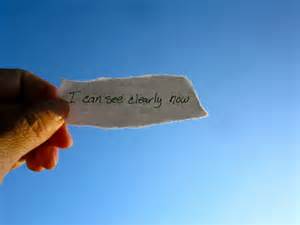
Five days later, back I go, apprehensive, skeptical, and still a bit in shock over the cost.  Twice as much as I’d paid in the U.S. The doctor comes out to greet me, takes me back to the examining room, puts the new glasses on me, and I can see!  Yes, I can see immediately.  No blurring, no straining.  With the last pair, I had not been able to see when I first tried them on.  The optician assured me they would settle…I tried to convince myself it was true, that my brain would eventually adjust.  It never did.

I was delighted.  How had he done it?  Well, he explained, he had owned the entire process – the exam, the prescription, the frames, the fitting, the delivery.  This wasn’t the case in the U.S.  The process is fragmented – the doctor who examined me there never knows whether his prescription was made correctly or whether it worked for me in the end.  The involvement with the patient and the product from beginning to end over 30 years, Dr. Isaac explained, was a great source of learning about how to do what he does.  Imagine that – it’s about the relationship, not efficiency, not cost, not speed, not pushing product.  Improving vision by talking to the patient, understanding what works and what doesn’t and then being committed to the end product?  What a great idea!

The Industrial Revolution separated our hearts from our hands as work became fragmented, impersonal and mechanized.  How can we recapture the humanness?  Perhaps we cannot change the underlying structures, we probably don’t want to in many cases because the modern world affords us a lot of conveniences, but we can own the part of the work that is ours.  We can take pride in what we do.  We can treat one another as human beings, not customers, clients, fans, followers, headcount, or any other dehumanizing and relationship-choking terms we may put on the people we work with and serve every day. Easier said than done, I know.  But we can start by putting names to faces – the clerk in the grocery store, the teller at the bank, the janitor in the office, the weird guy who never looks up as we pass every day in the corridor on the way to the coffee room. We can start with a greeting and smile for every human being that we encounter today. We can start by looking.  There. Right there. Look.